
An elderly care plan should be developed through a detailed initial assessment that identifies specific needs and defines clear therapeutic goals. This process requires the joint efforts of a multidisciplinary team and active family participation, ensuring constant reviews to maintain the effectiveness of individualized support.
Many Angolan families face the silent challenge of caring for elderly relatives without a structured roadmap, which often leads to physical and emotional exhaustion for caregivers. This lack of planning compromises the safety and dignity of our loved ones; after all, aging requires a technical and personalized approach. At Orchid Angola, we believe that care must be rigorously planned to guarantee longevity and quality of life. In this comprehensive guide, we will explore what constitutes an individualized care plan and why it is vital in Angola's current context. We will analyze the pillars of efficient support, specific management for Alzheimer's cases, and how specialized management fills the gap left by the country's lack of formal systems. Finally, we will provide a practical example to guide your caregiving journey with expertise.
What is an elderly care plan and why is it vital in Angola?

The Individualized Care Plan (ICP) is a technical and strategic tool that translates a senior's specific needs into concrete, monitorable actions. In European contexts, such as Portugal, this planning is often supported by the National Health Service network and established public infrastructure. In Angola, however, the reality presents a different challenge. The absence of a robust public support system shifts the entire responsibility to the family and private management.
This local infrastructure gap should not be seen merely as an obstacle, but as a call to professionalize home care. An effective elderly care plan transcends simple medication administration or occasional check-ins. While informal care is reactive and fragmented, a structured ICP is proactive, integrating clinical health, psychosocial balance, and rigorous safety of the physical environment where the senior resides.
For Angolan families, professional organization is the only safeguard against the accelerated decline of autonomy. This is where Orchid Care’s health management solutions become essential, filling the void left by the scarcity of state services. A well-defined plan anticipates risks, such as falls or hypertensive crises, and ensures that investment in caregivers and resources results in real dignity and quality of life. It is not just about assisting the elderly; it is about managing a complex ecosystem where the home becomes the primary healthcare unit. This technical rigor is the fundamental pillar for those seeking physical asset development for the wellness sector with international standards of excellence.
How to develop an elderly care plan step-by-step

Implementing an effective elderly care plan requires an immediate transition from a reactive model, focused only on emergencies, to a preventive and structured one. In Angola, where efficient management of private health resources is critical, this process must be methodical and documented. Rigorous preparation allows families and managers to transform the home into a high-performance clinical and functional environment.
1. Comprehensive Initial Assessment: This is the baseline diagnosis that supports the entire strategy. It must include a full clinical history, focusing on prevalent chronic diseases like hypertension and diabetes, but also a deep functional analysis. It is necessary to map mobility limitations, fall risks, and current cognitive status. Beyond the clinical aspect, the senior’s personal preferences, such as dietary habits and social interests, are fundamental to ensuring adherence to the plan.
2. Defining Therapeutic Objectives: Every planned action must have a measurable purpose. Objectives can be maintenance-focused, such as preserving the autonomy to walk twenty minutes a day, or control-focused, such as stabilizing blood pressure within specific parameters. These targets guide the investment in human resources and the intensity of supervision required, preventing unnecessary spending on ineffective interventions.
3. Selection and Coordination of Stakeholders: Excellence in care management clearly defines the competencies of each team member. This involves choosing specialist doctors, hiring technically trained caregivers, and defining the exact role of family members in emotional support. Clarity in responsibilities avoids critical gaps in medication administration or monitoring. For these professionals to operate effectively, physical asset development for the wellness sectorproject management and consultancy
becomes the essential foundation, ensuring the physical space supports the plan's requirements.
4. Activity Schedule and Monitoring: The plan translates into a daily calendar integrating medication times, hygiene routines, physical therapy sessions, and cognitive stimulation periods. It is vital to understand that this document is a living organism. It requires mandatory review every 3 to 6 months, or whenever a significant change occurs in the senior’s clinical condition.Orchid Care’s health management solutionsBy adopting these
specialized management services
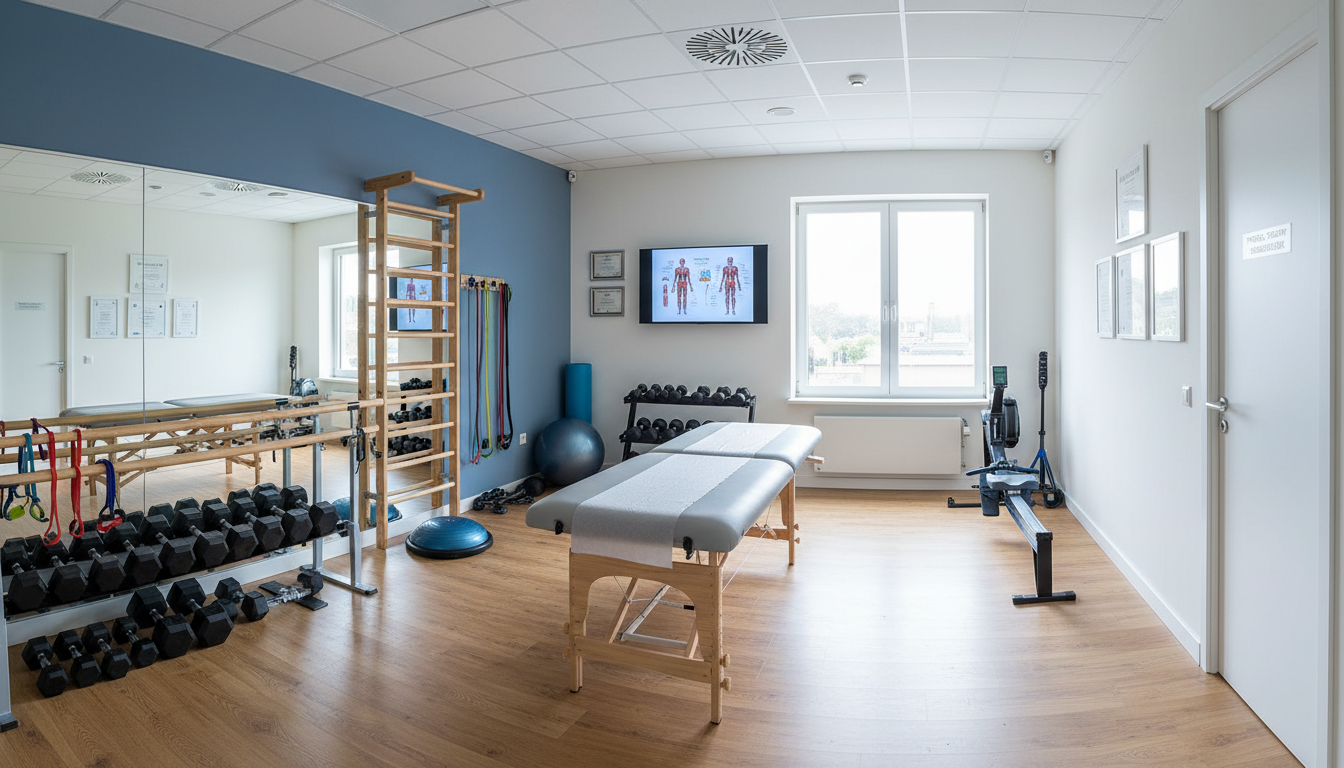
Professional physical therapy room with a treatment table and equipment, focused on recovering physical autonomy for the elderly.
Maintaining mobility is one of the central pillars of any preventive care plan.For an elderly care plan to be more than just a theoretical guide, it must rest on three axes of intervention that guarantee the individual's biopsychosocial integrity. These pillars form the necessary structure for private management in Angola to reach international standards of excellence and safety.The first pillar is
Functional Autonomy, focused on the senior's ability to perform Activities of Daily Living (ADLs). This axis ranges from personal hygiene and feeding to mobility inside and outside the home. The technical goal here is not just to replace the elderly in performing tasks, but to implement strategies that preserve their independence for as long as possible, using technical aids and rehabilitation routines that stimulate motor function.The second pillar involves
Clinical Care, essential in a scenario where chronic diseases, such as hypertension and diabetes, require constant vigilance. This pillar focuses on rigorous medication management, monitoring vital signs, and coordinating medical appointments. Precision in therapeutic administration is what distinguishes basic care from proactive health management, significantly reducing the rate of avoidable hospitalizations due to clinical decompensation.The third pillar is the
Psychosocial Area, which combats social isolation—a growing problem in Luanda and other urban provinces. Rapid urbanization often distances the elderly from active community life. A robust plan must include interventions that promote cognitive stimulation and social engagement, preventing mental decline and depression.The effectiveness of these three pillars is intrinsically linked to the physical asset development for the wellness sectoradaptation of the physical environmentOrchid Care’s health management solutions. As a specialist in
development and promotion
, A Orchid Angola understands that space must act as a facilitator of care. Eliminating architectural barriers and reconfiguring the home are fundamental for specialized management services to operate safely, transforming the residence into a high-performance clinical ecosystem.
Care plans for seniors with Alzheimer's or dementiaphysical asset development for the wellness sectorWhen a diagnosis involves neurodegenerative pathologies, such as Alzheimer's Disease or other forms of dementia, the
elderly care planOrchid Care’s health management solutions stops being just a support guide and becomes a rigorous strategy for behavioral management and safety. The complexity of these conditions requires a transition from intuitive care to continuous technical intervention.
The implementation of inflexible routines is the central element in mitigating clinical anxiety. Absolute predictability of meal, hygiene, and rest times creates a psychological reference point that minimizes episodes of agitation and spatial disorientation. Simultaneously, physical safety becomes a critical priority. Strategies to prevent wandering or domestic accidents require a reconfiguration of the space, where
project management and consultancy
proves decisive in creating secure perimeters without compromising the home's aesthetics or comfort.physical asset development for the wellness sectorThis level of demand differs drastically from basic family support. Constant supervision, necessary to manage cognitive and behavioral changes, requires trained professionals who master stimulation and conflict de-escalation techniques. Through
Orchid Carespecialized management services, Angolan families can ensure that monitoring is not just present, but technically capable of preserving the senior’s dignity and functionality for as long as possible.Orchid Care’s health management solutionsThe lack of a formal system in Angola and the role of specialized management
In Angola, the gerontology landscape is marked by a significant structural gap. The absence of a public network for long-term care or institutionalized home support shifts the complexity of caregiving to the domestic environment. This reality requires the family to be not just emotional support, but the primary manager of a private health unit. The local infrastructure gap does not allow for generic approaches; it demands the creation of high-standard customized solutions.
A Orchid Angola acts strategically to fill this void through Orchid Care’s health management solutionsphysical asset development
. Our role consists of transforming the capital of investors and families into resilient physical infrastructure adapted to modern clinical demands. When the public system is limited, the only way to guarantee dignity and safety in old age is through the implementation of care micro-systems. These small health cells, operated within the home or in specialized private units, function with the technical rigor of a hospital but the comfort of a home. | In this context, the application of a structured | individualized care plan | becomes the centerpiece of the operation. Without state supervision, the responsibility for service quality falls on |
|---|---|---|---|
specialized management services | . Our specialized management ensures that every intervention, from physical therapy to metabolic control, is executed with precision. It is this transition from informal care to the professional management of assets and services that defines excellence in longevity within the Angolan market. | Practical example of an individual care plan | To materialize a longevity strategy, the systematization of actions is imperative. Below, we present a technical model illustrating how clinical and functional needs are converted into operational goals within the Angolan context. This example serves as a basis for |
Orchid Care’s solutions | , ensuring that every investment in human resources and infrastructure produces measurable results. | Identified Need | Therapeutic Objective |
Technical Intervention | Directly Responsible | High risk of falls | Increase motor stability |
Physical therapy (3x/week) and furniture adaptation | Physical Therapist and Asset Manager | Systolic arterial hypertension | Stabilize BP < 140/90 mmHg |
Daily BP monitoring and pharmacotherapy managementphysical asset development for the wellness sectorNursing / Orchid Care
Mild cognitive declinePreserve recent memoryDaily cognitive stimulation and reading routine